
PEX Repipe
PEX Repipe in San Diego
PEX repiping replaces aging or leak-prone water supply lines with flexible cross-linked polyethylene. 1st Response Leak Detection provides PEX repiping for homes, apartments and buildings across San Diego County, with the plumbing evaluated first so you know a repipe is the right call.
- 15+ Years Serving San Diego
- Licensed Contractor #1063131
- PEX & Copper Repiping
- Homes & Buildings
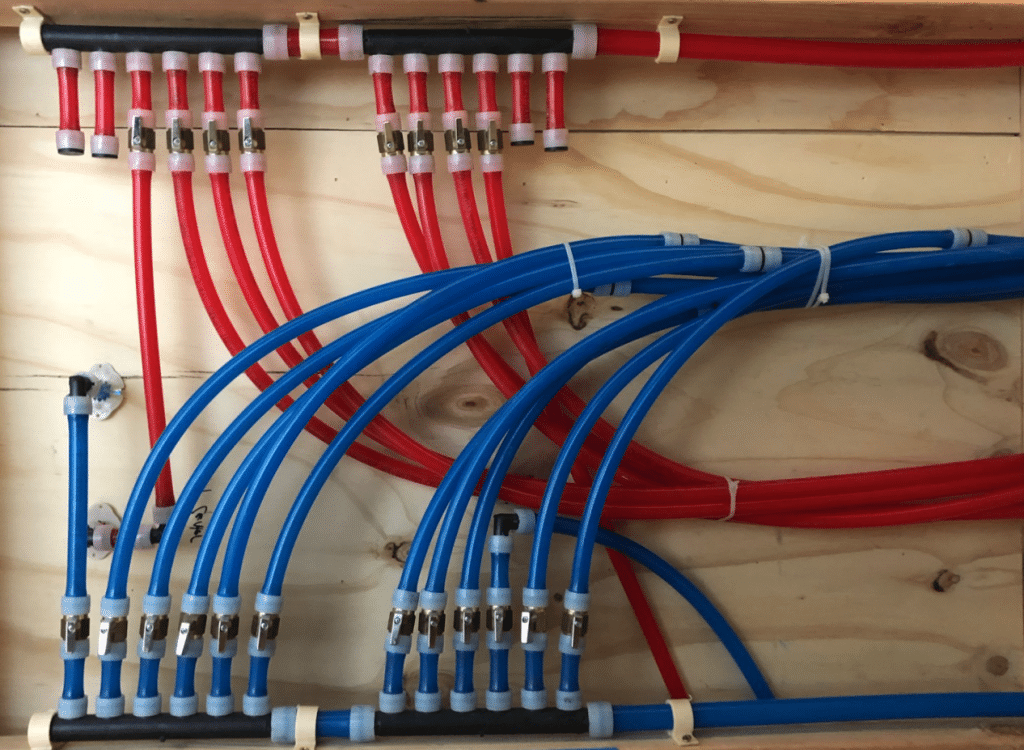
PEX supply lines at a manifold
Service Overview
What Is a PEX Repipe?
Quick answer
A PEX repipe is the replacement of a building’s hot and cold water supply lines with PEX, a flexible cross-linked polyethylene tubing. Because PEX bends around corners, it needs fewer fittings than rigid pipe, and because it is plastic, it does not rust or build up scale the way older metal pipes do.
PEX stands for cross-linked polyethylene. Polyethylene is the raw material, and the X refers to the cross-linking of the polyethylene across its molecular chains, which gives the tubing its strength and flexibility. It has become a common choice for repiping homes and buildings.
Many properties consider PEX when older galvanized steel, polybutylene or corroding metal lines start leaking repeatedly. In some water systems, water chemistry contributes to corrosion of metal pipes over time; PEX does not corrode, so those problems do not carry over into the new system.
A whole-house repipe is a big step, and you do not want to get it wrong. You are investing in repiping to avoid recurring leaks and pipe damage, so the work should be done by specialists. We start by understanding the condition of your current plumbing, then explain whether PEX fits your property.

When to Consider It
When a PEX Repipe May Be the Right Choice
These situations often lead property owners to consider repiping with PEX.
- Recurring leaks in old linesNew leaks after every repair.
- Galvanized steel supply pipesRusting and scaling from the inside.
- Polybutylene pipingCommon in 1980s and 1990s homes.
- Rust-colored or cloudy waterCorrosion in metal supply lines.
- Falling water pressureBuildup narrowing the pipes.
- Budget-conscious repipesPEX is generally less costly than copper.
- Complex routingFlexible tubing bends around obstacles.
- Repeated slab leaksAging lines under the foundation.
Comparing materials? See copper repipe or the plumbing repipe overview.
PEX Advantages
Benefits of Repiping With PEX
PEX piping has several advantages, including but not limited to:
- Budget-friendly. PEX is generally less expensive than copper, and because it is flexible, fewer fittings are needed.
- Faster to install. Flexible tubing can be run in longer continuous lengths with fewer connections.
- Holds heat well. PEX does not conduct heat as readily as metal pipe, which helps hot water stay hot on its way to the fixture.
- Resists buildup. PEX resists the scale buildup that narrows older metal pipes, which helps keep future plumbing costs down.
- No rust or corrosion. As a plastic, PEX does not rust the way galvanized steel does.
- Flexible and freeze-resistant. PEX can expand slightly, which makes it less likely to burst than rigid pipe.
Things to know about PEX
PEX should be protected from direct sunlight, so it is run inside walls, ceilings and protected spaces rather than exposed outdoors. It connects to fixtures and other plumbing with compatible fittings, and many systems use a manifold to distribute water to individual fixtures. Your installer will explain how the system will be laid out for your property.
Tell us about your property and its current pipes. We will explain whether PEX or copper makes more sense.
(619) 374-8554Or send a service requestHow It Works
What a PEX Repipe Typically Involves
- 01
Evaluate Existing Pipes
Pipe material, leak history, pressure and water quality are reviewed.
- 02
Plan the Layout
Routing, access points, fixtures included and any manifold are decided up front.
- 03
Run New PEX Lines
New hot and cold PEX lines are installed and connected to the fixtures.
- 04
Test the System
The new lines are tested before completion, and access openings are addressed as agreed.
Planning Considerations
What Shapes a PEX Repipe Project
No two repipes are the same. These factors affect how the project is planned.
Access & Routing
How lines can be routed through walls, ceilings, attics and crawl spaces determines where access is needed.
Layout & Fittings
Whether lines branch from a trunk or run from a manifold affects fittings and future maintenance.
Property Type & Scope
A single home, a condo or an occupied building each need different scheduling and scope.
- Scope explained before work begins
- Material matched to the property
- Leak history reviewed first
Leak Detection First
How Leak Detection Informs a PEX Repipe
Before replacing every pipe, it helps to know what is actually happening in the system. As a leak detection company, we can confirm whether leaks are isolated or spread throughout the plumbing.
- One leak in healthy pipe usually calls for a targeted leak repair.
- Multiple or recurring leaks, especially in galvanized or polybutylene lines, point toward a repipe.
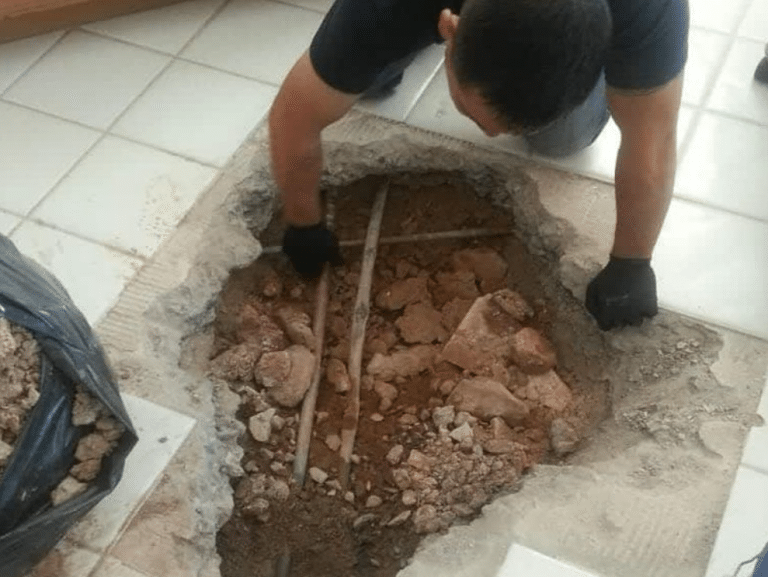
- Leaks under the slab can be located with slab leak detection so you understand the condition of those lines before deciding.
Not sure what you are seeing? Review the signs of a leak.
Not sure which service you need? Describe what you are seeing and we will point you in the right direction.
(619) 374-8554Or send a service requestRelated Services
Related Repipe and Leak Detection Services
Compare materials or find out where your current pipes are leaking.


Have questions about a repipe project? Tell us about your property.
Service Area
PEX Repiping Across San Diego County
We provide PEX repiping for homes, condos, apartments and buildings throughout San Diego County.
- Mira Mesa
- Clairemont
- Tierrasanta
- Santee
- El Cajon
- Spring Valley
- Chula Vista
- Escondido
- Oceanside
150 neighborhoods and communities listed
FAQs
PEX Repipe FAQs
Common questions about repiping with PEX. More answers on our FAQs page.
Talk to a leak detection specialist now. We answer 24 hours a day.
(619) 374-8554
What does PEX stand for?
Cross-linked polyethylene. Polyethylene is the raw material, and the X refers to the cross-linking of its molecular chains, which gives the tubing strength and flexibility.
Is PEX a good choice for repiping?
For many properties, yes. It is flexible, needs fewer fittings, resists scale buildup, does not rust and is generally more budget-friendly than copper. Whether it is the best choice depends on your property.
What is the difference between PEX and copper?
PEX is flexible plastic tubing that needs fewer fittings and is usually less expensive. Copper is rigid, corrosion resistant and long established. See copper repipe to compare.
Is PEX less likely to burst?
PEX can expand slightly, which makes it more resistant to bursting than rigid pipe, including when water freezes.
Can PEX be exposed to sunlight?
PEX should be protected from direct sunlight, so it is installed inside walls, ceilings and protected spaces rather than exposed outdoors.
How long does a PEX repipe take?
It depends on the size of the property, the plumbing layout and access. Your project scope will outline what is involved for your building.
Do you offer PEX repiping throughout San Diego County?
Yes. Call (619) 374-8554 or see all service areas.
Considering PEX?
Replace Failing Pipes With PEX.
Contact 1st Response Leak Detection to talk about your current pipes and whether a PEX repipe is the right fit for your property.

Request a Repipe Evaluation
Send a request and we’ll get back to you quickly. For active leaks, please call.
Emergency? Call (619) 374-8554. We’re open 24 hours.