
Frequently Asked Questions
Leak Detection FAQs for San Diego
Straight answers to the questions San Diego homeowners, property managers and businesses ask most about finding leaks: emergencies, slab leaks, high water bills, thermal imaging, moisture, sewer lines, commercial properties and scheduling.
- 24/7 Emergency Service
- 15+ Years Experience
- Licensed Contractor #1063131
- Serving San Diego County
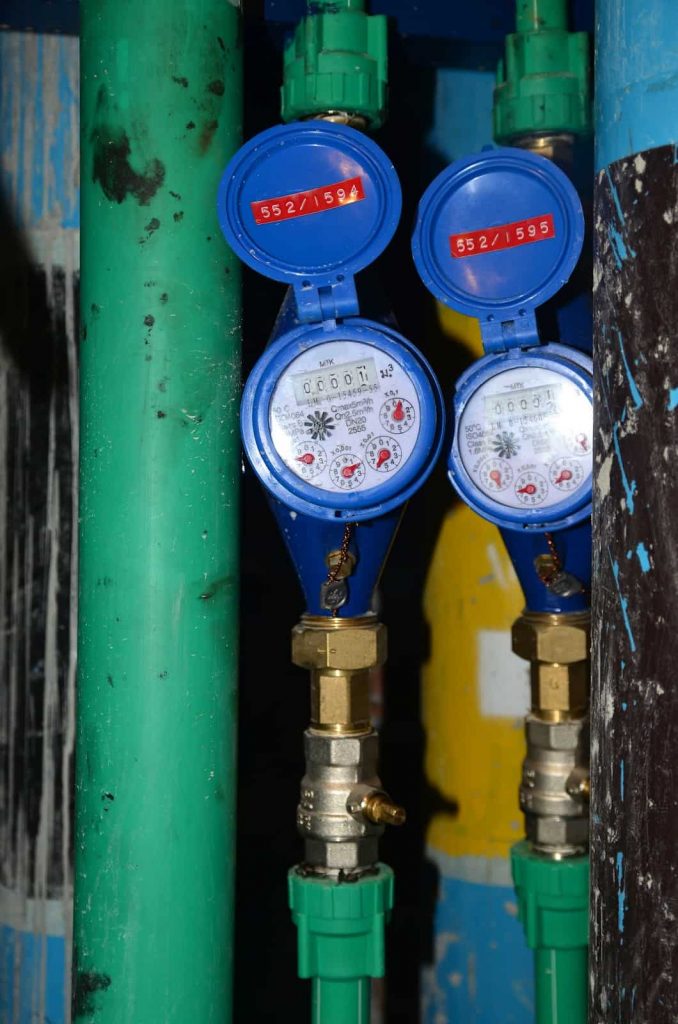
Checking the water meter is a simple first test
Browse by Topic
Find Answers by Topic
Choose a topic to jump to its questions. For questions about a specific service, each leak detection service page also has its own FAQs. Need help now? Call (619) 374-8554, 24/7.
General
General Leak Detection Questions
The basics: what leak detection is, why leaks happen and how to protect your property.
What is leak detection and why does it matter?
Leak detection is the process of confirming that water is escaping and pinpointing exactly where, using equipment such as thermal imaging cameras, acoustic listening devices, pressure tests and moisture meters. Knowing the precise location first means a repair can be targeted, which limits how much wall, floor or concrete has to be opened and stops the damage sooner.
What causes pipes to leak?
Common causes include high water pressure, corrosion and age, worn fittings and connections, shifting soil or foundation movement, physical damage and pipe materials known to deteriorate, such as older galvanized steel or polybutylene. In San Diego, many hidden leaks are found in water lines under slab foundations and in landscape irrigation systems.
What are the dangers of a hidden leak?
A hidden leak can soak drywall, framing, insulation, cabinets and flooring for weeks before it shows, encouraging mold and rot and raising your water bill the whole time. Leaks near electrical or mechanical equipment add a safety concern. The longer a leak runs, the larger the repair usually becomes.
How can I help prevent plumbing leaks?
Know where your main shutoff valve is, avoid overpacking under-sink cabinets where items can knock supply lines loose, and periodically check washing machine hoses, toilet supply lines and water heater connections. Watch exposed pipes for rust or discoloration and keep an eye on your water bill. When pipes are aging and leaking repeatedly, replacing them is sometimes better than patching; see plumbing repipe.
Do I need a plumber or a leak detection specialist?
If you can see exactly where the water is coming from, such as a dripping faucet, the source is already known. If you have signs of a leak but cannot see the source, such as a rising bill, stains, warm floors or a meter that moves with the water off, a leak detection specialist locates it first so the repair is targeted. We provide both detection and leak repair.
What types of properties do you work on?
Single-family homes, condos and townhomes, apartment buildings, HOA communities, offices and commercial buildings, and water purveyors. See commercial leak detection and water purveyor leak detection for details.
Emergency Leaks
Emergency Leak Questions
What to do when water is actively escaping. If that is happening now, call (619) 374-8554.
Talk to a leak detection specialist. We answer 24 hours a day.
(619) 374-8554
What counts as a leak emergency?
Treat it as an emergency if water is actively flowing and you cannot stop it, a pipe has burst, water is coming through a ceiling, a ceiling is sagging or bulging, water is near outlets, panels or light fixtures, or sewage is backing up into the property. We answer 24 hours a day, 365 days a year.
What should I do while I wait for help?
Shut off the main water valve if you can do so safely. Move electronics, documents and valuables away from the water, keep people and pets clear of sagging ceilings and wet electrical areas, and do not use electrical appliances in standing water. Taking photos of the damage for your own records is also a good idea.
How do I shut off the water if I cannot find the main valve?
Many properties also have a shutoff at the water meter, usually in a box near the street. It may take a meter key or wrench to turn. If you cannot locate or operate a shutoff, call us and we will talk you through your options while help is arranged.
Water is coming through my ceiling from the unit above. What should I do?
Let the upstairs occupant, your property manager or your HOA know right away so water to that unit can be shut off. Keep away from light fixtures where water is dripping, move belongings out of the way and call us. Leak detection can show whether the water is coming from a supply line, a drain, a shower, an appliance or something else.
Can a small leak wait until regular business hours?
A slow drip you can contain, for example under a sink where you can close the fixture shutoff and set a bucket, can often wait. A leak you cannot stop, a stain that is spreading or water near anything electrical should not. Because we are available around the clock, it is always fine to call and ask.
Slab Leaks
Slab Leak Questions
Leaks in water lines beneath a concrete foundation, one of the most common hidden leaks in San Diego homes.
What is a slab leak?
A slab leak is a leak in a water line that runs within or beneath a building’s concrete slab foundation. Many San Diego homes are built on slabs, so when one of those lines leaks, the water goes into the soil and flooring rather than somewhere you can see it.
Are hot water lines more likely to show a slab leak?
Leaks can happen on hot or cold lines. Hot water leaks are often noticed sooner because they can warm the floor above them and keep the water heater running more than usual. Cold water slab leaks may show up only as a higher bill or a meter that keeps moving.
How is a slab leak repaired once it is found?
It depends on where the leak is and the condition of the pipe. Options include a targeted repair through a small opening at the leak point, or replacing or rerouting the affected line, which can be part of a repipe. Locating the leak precisely first keeps any opening as small as possible.
Can a slab leak damage my foundation?
Water escaping under a slab for a long time can wash out or soften the soil beneath the foundation and damage flooring above it. That is one reason not to ignore the signs: slab leak detection finds the leak so it can be stopped.
Can I have more than one slab leak?
Yes. If a line under the slab has failed in one spot because of corrosion or age, other spots on the same piping may follow. Repeated slab leaks are often a sign that replacing the water lines is worth considering instead of repairing one leak at a time.
High Water Bills
High Water Bill Questions
When the bill goes up and you cannot see why.
How much can a hidden leak add to my water bill?
It varies widely. A small drip may add little, while a continuous leak in a supply line, a line under the slab or an irrigation line runs 24 hours a day and can add up quickly over a billing cycle. The sooner it is found, the less water is lost.
My bill went up, but my meter does not move with the water off. What does that mean?
A still meter suggests there is no continuous leak at that moment. The increase could come from an intermittent leak, such as a toilet that refills on its own or an irrigation valve that leaks only while the system runs, from seasonal watering or from a change in rates or billing. Billing questions are best taken to your water provider.
Is a leak on the street side of the meter my responsibility?
Typically, leaks between the meter and the street are handled by the water provider, while leaks on the property side of the meter are the owner’s responsibility and show up on the meter. If you are unsure where a leak is, locating it answers that question.
Why is my water bill higher in summer?
Landscape irrigation is usually the biggest reason, along with more showers, laundry and pool or garden use. Compare your bill with the same months last year. If it is well above the normal seasonal pattern, check the meter with all water off.
What should I have ready when I call about a high bill?
Your recent bills and one from the same period last year, whether the meter moves with all water off, any other signs you have noticed such as warm floors, damp spots or the sound of running water, and whether the property has irrigation. That helps narrow down where to look.
Thermal & Infrared
Thermal Imaging and Infrared Questions
How thermal cameras help trace leaks without opening walls.
Does a thermal camera actually see water?
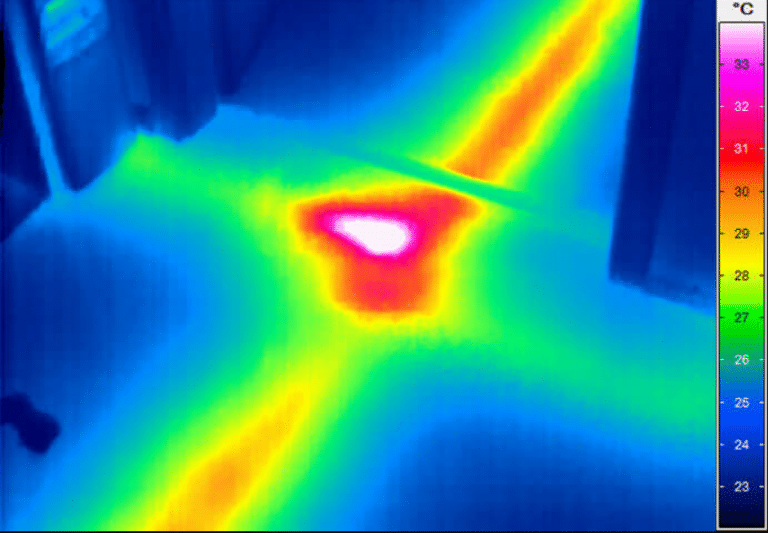
Not directly. It measures surface temperature. Wet materials are usually cooler than dry ones because water evaporates, and a hot water leak warms the area around it, so moisture shows up as a temperature pattern. Findings are checked with other tools, such as moisture meters, before conclusions are drawn.
When is thermal imaging most useful?
It is especially useful for tracing a stain on a wall or ceiling back toward its source, following a hot water leak under a floor, finding where rain or irrigation water is entering a building, and checking whether an area has dried after water damage.
What can make thermal imaging less effective?
Thermal imaging needs a temperature difference to work with. Direct sun on an exterior wall, heavy insulation, thick stone or tile, and very small or slow leaks can make patterns harder to read. That is why it is used alongside acoustic, pressure and moisture testing.
Can thermal imaging find leaks under tile or hardwood floors?
Often, yes, when the leak is on a hot water line: the warmth can show through tile, stone or wood. Cold water leaks under a floor are harder to see thermally, so pressure testing and acoustic equipment do more of the work.
How can I prepare for a thermal imaging inspection?
Clear access to the walls, ceilings and floors where you have noticed signs, and note when the signs appear, for example after rain, after a shower is used or only when irrigation runs. Let us know about any recent repairs in the area as well.
Moisture & Water Intrusion
Moisture and Water Intrusion Questions
Water that comes from outside the plumbing, and moisture that lingers after a leak.
Why are my walls damp after it rains?
Water may be getting in through the building envelope: around windows and doors, through cracks in stucco, at roof flashing, under balconies or where soil slopes toward the house. Water intrusion detection and rain leak detection trace where it enters.
Why does it matter that materials are fully dry before repairs?
Closing up drywall, flooring or cabinets while they are still wet traps the moisture, which can lead to mold, warping and odors later. Moisture readings show when materials have returned to normal levels so repairs can proceed with confidence.
Can sprinklers cause water intrusion?
Yes. Sprinkler heads that spray walls, windows or the foundation, and irrigation that saturates soil next to the house, can push water into a building. Adjusting spray patterns helps, and irrigation leak detection finds leaking lines and valves.
Is condensation the same as a leak?
No. Condensation forms when warm, humid air meets a cool surface, such as a window, a cold water pipe or an air conditioning line. It can still cause staining and mold over time, and moisture detection helps tell condensation apart from an actual leak. See HVAC equipment leak detection for AC-related water.
Can stucco let water into my home?
Cracks in stucco and gaps around windows, vents and other penetrations can let water get behind the exterior finish. Signs inside include stains or bubbling paint near windows and dampness on exterior walls after rain.
Sewer & Camera
Sewer Line and Camera Inspection Questions
Drain and sewer problems, odors and what a camera inspection shows.
How do I know if it is a clog or a damaged sewer line?
One slow fixture usually points to a local clog in that drain. Several slow fixtures at once, gurgling, backups at the lowest drains, sewer odors or soggy patches in the yard point toward the main line. A sewer camera inspection shows which it is.
Can a sewer line leak under my slab?
Yes. Drain lines also run beneath slab foundations. Signs include sewer odors indoors, damp or stained flooring, new cracks and recurring drain problems. A camera inspection can show the condition of the line from the inside.
Is a sewer camera inspection worth it when buying a home?
For older homes, or homes with large trees near the sewer line, many buyers find it worthwhile because it shows the condition of a line that is otherwise hidden underground. It can reveal cracks, separations, sagging sections and root intrusion.
When should a sewer line be checked?
There is no single schedule. Common reasons are recurring backups or slow drains, sewer odors, buying an older property, planning a remodel that adds plumbing, and large trees near the line.
Do you repair sewer lines?
Yes. When a camera inspection or leak detection finds damage, we provide sewer line leak repair.
Commercial
Commercial Property Questions
For property managers, HOA boards and business owners.
What kinds of commercial properties do you serve?
Offices and commercial buildings, retail spaces, commercial kitchens, apartment buildings, HOA communities, mid-rise buildings and senior housing, along with water purveyors. See commercial leak detection.
Do you work with property managers and HOA boards?
Yes. Property managers and HOA boards often call us when a leak affects more than one unit or a common area, when water use is higher than expected, or when they need to know whether repeated leaks mean the building should be repiped.
How can a leak in one unit affect others?
Water travels through ceilings, walls and floor assemblies, so a leak in one unit can show up in the unit below or next door. Finding the true source helps stop repeat damage and makes it clear which plumbing needs repair.
Can leak detection help reduce a building’s water use?
Locating hidden leaks in supply lines, irrigation and fixtures stops water from being wasted. On larger properties, irrigation systems and common-area plumbing are frequent places to look.
Do you repipe commercial and multi-unit buildings?
Yes. See commercial repipe, apartment repipe and HOA communities repipe.
Scheduling & Service Areas
Scheduling and Service Area Questions
How to reach us and where we work.
Do you serve my neighborhood?
We serve all of San Diego County, including Oceanside, Carlsbad, Encinitas, Escondido, Poway, La Jolla, Downtown San Diego, El Cajon, Chula Vista and Imperial Beach. See our service areas for the full list of neighborhoods and communities.
How do I schedule leak detection?
Call (619) 374-8554 or send the form on our request service page and describe what you are seeing. For an active leak, please call rather than using the form.
Are you available on weekends and holidays?
Yes. We are available 24 hours a day, 7 days a week, 365 days a year.
Where are you located?
We are based in Carlsbad, CA 92008 and come to your property anywhere in San Diego County. See our contact page for phone, email and hours.
What should I include in a service request?
The type of property and its city or neighborhood, what you are seeing and where, when you first noticed it, whether your water meter moves with all water off, and the best way to reach you.
Keep Exploring
More Ways to Get Answers
Guides and pages that go deeper than a single answer.



Didn’t Find Your Answer?
Ask a Leak Detection Specialist.
Call 1st Response Leak Detection or send a request describing what you are seeing. We help homeowners and businesses throughout San Diego County, 24 hours a day.

Where Is Your Leak?
Send a request and we’ll get back to you quickly. For active leaks, please call.
Emergency? Call (619) 374-8554. We’re open 24 hours.