
Kitchen Leak Detection
Kitchen Leak Detection in San Diego
Water under the sink, a warped cabinet floor or a musty smell behind the dishwasher? 1st Response Leak Detection finds kitchen leaks at sinks, faucets, disposals, dishwashers, refrigerator lines and hidden drain pipes in San Diego County homes and businesses.
- 24/7 Emergency Service
- 15+ Years Experience
- Licensed Contractor #1063131
- Serving San Diego County
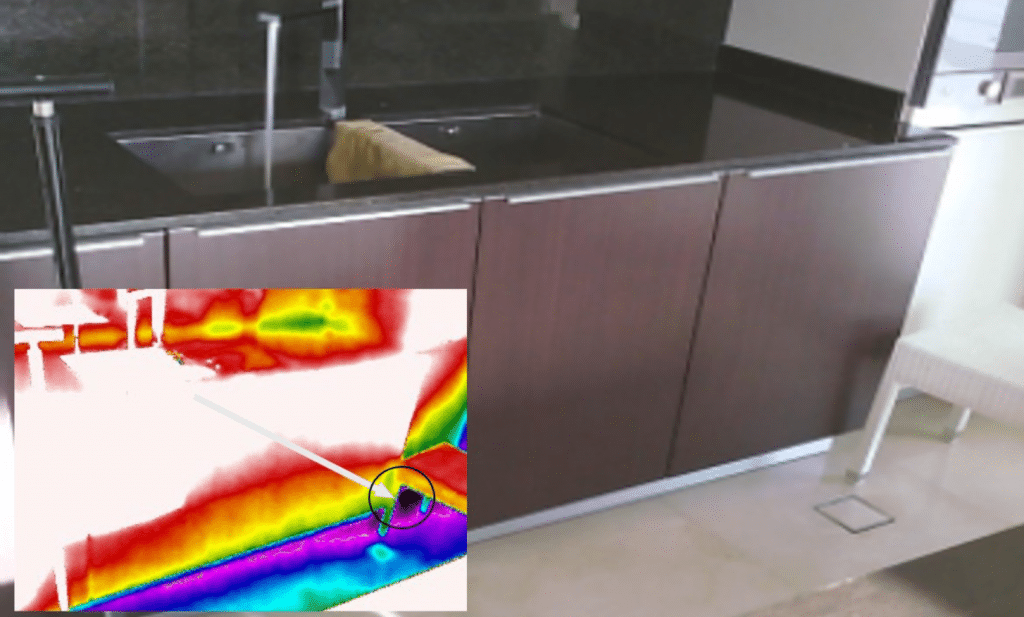
Thermal view of moisture under cabinets
Service Overview
What Is Kitchen Leak Detection?
Quick answer
Kitchen leak detection is the process of locating leaks in kitchen plumbing and appliance connections, including sink supply lines, faucets and sprayers, drain pipes, garbage disposals, dishwashers, water filters and refrigerator water lines, and finding hidden leaks in the walls and floors behind cabinets before they cause rot and mold.
You spend a lot of time in your kitchen cooking, making memories and spending time with family. Kitchen leaks can be a nuisance, but they need to be dealt with before they damage your home. Cabinets, toe kicks and flooring hide a lot of plumbing, so a slow leak can soak into the subfloor long before you see water.
Wear and tear happens naturally in kitchens and bathrooms. Pipes can clog from residue and buildup, which adds stress, encourages more leaks and corrodes the lines. Supply connections to dishwashers, ice makers and filters loosen over time.
The minute you suspect a kitchen leak at home or at your workplace, have it checked. Our technicians find the problem quickly and explain it clearly, and you will know the total cost of repair before any repair work begins.
Warning Signs
Signs of a Kitchen Leak
Kitchen leaks are often hidden by cabinets and appliances. These are the signs to watch for.
- Water under the sinkDamp cabinet floor or items getting wet.
- Warped or soft cabinet baseWood swelling from repeated moisture.
- Musty odor in the kitchenMoisture behind cabinets or appliances.
- Stains on walls or ceilings belowWater traveling from the kitchen down.
- Lifting or stained flooringNear the dishwasher or refrigerator.
- Higher water billA leak that runs constantly.
- Dripping or hissing soundsFrom supply lines or the faucet.
- Slow or gurgling drainsClogs that stress drain connections.
Bathroom leaks too? See sink and shower leak detection.
Common Sources
Where Kitchen Leaks Come From
Most kitchen leaks start at a handful of components under and around the sink. These are seven common causes of kitchen sink leaks:
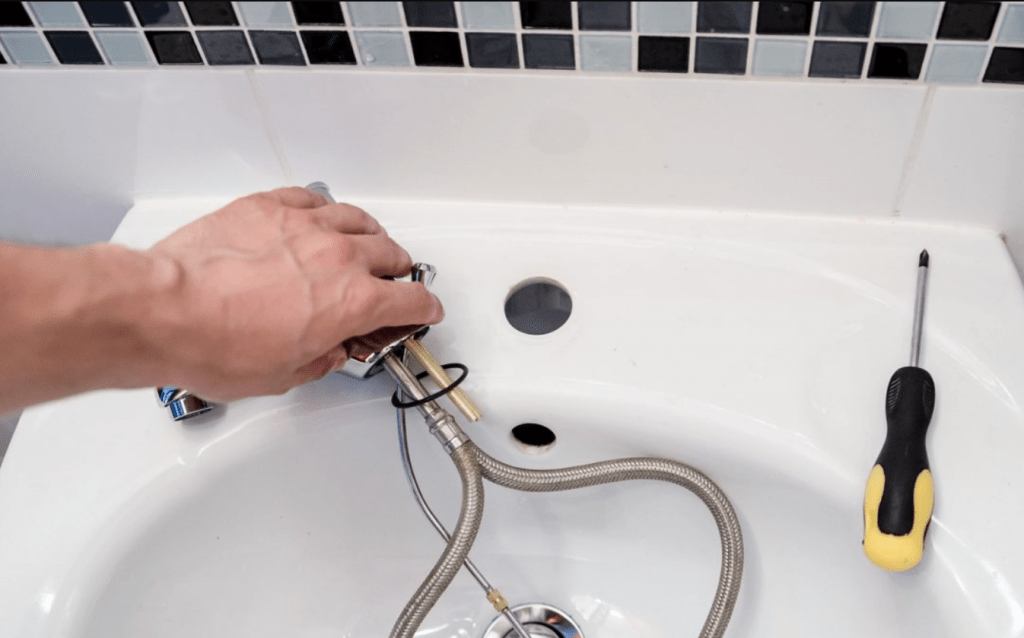
- Faucet sprayer. Worn hoses and connections on the pull-out or side sprayer.
- Air gap. The dishwasher air gap can leak or overflow when the drain line is blocked.
- Garbage disposal. Seals, flanges and connections on the disposal unit.
- Water filter system. Under-sink filters and their fittings.
- Water supply tubes. Supply lines to the faucet, dishwasher and ice maker.
- Basket strainer. The seal between the sink drain basket and the sink.
- Drain pipes. The most common source: loose slip nuts, worn washers and corroded drain lines.
How fast can mold grow from a kitchen leak?
Mold can begin growing within 24 to 48 hours under the right conditions. Kitchen cabinets provide an ideal setting: moisture, darkness and food sources. That is why slow leaks under sinks and behind dishwashers should be found and fixed quickly.
Avoid chemical drain cleaners
Chemical drain cleaners can corrode pipes and drains over time, which leads to more leaks. For recurring clogs, professional cleaning methods are a better long-term choice. Replacing old, corroded pipes on time also helps prevent leaks and plumbing issues.
Tell us where you see water or damage. We will explain how we would find the source.
(619) 374-8554Or send a service requestHow It Works
How We Find a Kitchen Leak
- 01
Inspect Fixtures
We check the sink, faucet, sprayer, disposal, filter and appliance connections.
- 02
Test Under Use
Running water and appliances shows leaks that only appear during use.
- 03
Check Hidden Areas
Moisture readings and thermal imaging check walls and floors behind cabinets.
- 04
Explain the Repair
You get clear findings and the total cost of repair before any repair work begins.
Detection Methods
Finding Leaks Behind Cabinets and Appliances
Kitchen leaks are often hidden. These methods find them without removing cabinets to search.
Fixture & Connection Inspection
Supply lines, drains, the disposal and appliance hookups are inspected and tested under use.
Moisture Readings
Meters check cabinet bases, toe kicks, walls and flooring for hidden moisture.
Thermal Imaging
Reveals moisture patterns behind cabinets and under flooring.
Pressure Testing
Confirms whether supply lines in the wall or floor are leaking.
- No pulling cabinets just to search
- Findings explained in plain language
- Repair cost before any repair work begins
Why It Matters
Why Kitchen Leaks Should Be Found Early
- Protect cabinets and floors. Particleboard cabinet bases and wood subfloors swell and rot when they stay wet.
- Prevent mold. Dark, damp cabinets are an ideal environment for mold growth.
- Avoid ceiling damage below. In multi-story homes and buildings, kitchen leaks often show up as stains on the ceiling underneath.
- Stop the waste. Supply line and fixture leaks can run constantly and show up on your water bill.
For restaurants and commercial kitchens, early detection also helps avoid downtime. See commercial leak detection.
Not sure which service you need? Describe what you are seeing and we will point you in the right direction.
(619) 374-8554Or send a service requestRelated Services
Services Related to Kitchen Leaks
Kitchen leaks often connect to these services.


Explore all of our leak detection services.
Service Area
Kitchen Leak Detection Across San Diego County
We find kitchen leaks for homes, condos, restaurants and commercial kitchens throughout San Diego County.
- Hillcrest
- North Park
- Pacific Beach
- La Jolla
- Del Mar
- Carlsbad
- Escondido
- La Mesa
- Chula Vista
150 neighborhoods and communities listed
FAQs
Kitchen Leak FAQs
Common questions about kitchen leaks. More answers on our leak detection FAQs page.
Talk to a leak detection specialist now. We answer 24 hours a day.
(619) 374-8554
How do I find a leak under my kitchen cabinets?
Dry the area, then check the drain pipes, supply lines, disposal, filter and dishwasher connections while running water. If you cannot find the source or the cabinet floor stays damp, the leak may be inside the wall or floor and should be located professionally.
What is the most common cause of a kitchen sink leak?
Drain pipes are the most common source, usually from loose slip nuts, worn washers or corroded drain lines. Sprayers, air gaps, disposals, filters, supply tubes and basket strainers are other frequent causes.
How fast can mold grow under my kitchen sink?
Under the right conditions, mold can begin growing within 24 to 48 hours of a leak, because cabinets provide moisture, darkness and food sources.
Can a dishwasher or refrigerator line leak inside the wall?
Yes. Supply lines to dishwashers, ice makers and filters can leak behind appliances and cabinets, often showing up first as lifting floors or stains below.
Are chemical drain cleaners bad for pipes?
They can corrode pipes and drains over time and contribute to leaks. Professional cleaning methods are a better long-term option for recurring clogs.
Do you handle commercial kitchens?
Yes. We locate leaks in restaurants and commercial kitchens. See commercial leak detection.
Do you offer kitchen leak detection throughout San Diego County?
Yes. Call (619) 374-8554, available 24/7, or see all service areas.
Think You Have a Leak?
Leak in the Kitchen? Find It Fast.
Contact us for kitchen leak detection. We will locate the source and explain the repair before any work begins.

Request Kitchen Leak Detection
Send a request and we’ll get back to you quickly. For active leaks, please call.
Emergency? Call (619) 374-8554. We’re open 24 hours.