
Moisture Detection
Moisture Detection in San Diego
The first step with any leak is finding where the water comes from and how far it has gone. 1st Response Leak Detection measures and documents moisture in walls, floors, ceilings and building materials across San Diego County, so leaks can be stopped and drying can be planned correctly.
- 24/7 Emergency Service
- 15+ Years Experience
- Licensed Contractor #1063131
- Serving San Diego County
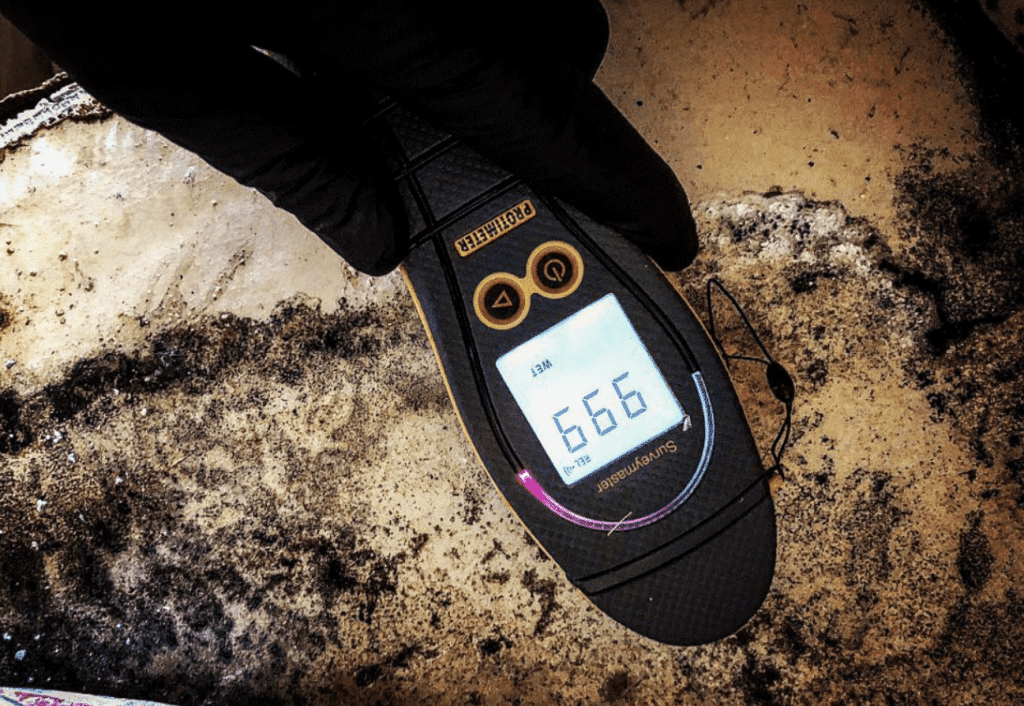
Moisture meter reading on damp material
Service Overview
What Is Moisture Detection?
Quick answer
Moisture detection is the use of moisture meters, sensors, thermo-hygrometers and thermal imaging to find where water is present inside building materials, measure how much is there and map how far it has migrated from the source. It shows the true extent of a leak or water intrusion, including areas that look dry on the surface.
When water gets into a property, the visible stain or puddle is rarely the whole story. Water flows under walls, soaks into drywall and wood, and can come from above, so the wet area is usually larger than it appears. If you cannot identify the source and the extent of the moisture, you cannot control it, stop it or dry it properly.
Moisture left untreated becomes a bigger problem over time: materials weaken, finishes are damaged and mold can develop. Hidden leaks can be quietly damaging your home without any obvious sign until the repair is much larger.
1st Response Leak Detection specialists assess and document how far water has migrated through the structure, its systems and contents using suitable moisture detection equipment. You get clear findings, and you will know the total cost of any repair before repair work begins.

Warning Signs
Signs You Need Moisture Detection
These are common signs that moisture is building up somewhere you cannot see.
- Musty or earthy odorsOften the first sign of hidden moisture.
- Peeling or bubbling paintMoisture pushing through wall finishes.
- Warped or cupped flooringWater absorbed into wood or subfloor.
- Ceiling stains or saggingWater collecting above drywall.
- Damp baseboards or carpetWater traveling under walls.
- Visible mold or mildewGrowing where moisture stays trapped.
- After a leak, flood or burst pipeFind out how far the water traveled.
- Persistent humidity indoorsMoisture may be entering from outside.
Water coming in from outside? See water intrusion detection.
Our Process
Determining the Extent of Moisture Intrusion and Migration
Determining how far moisture has intruded and migrated requires moisture detection equipment. Equipment used during the preliminary inspection can include, but is not limited to:
- Moisture sensors
- Thermo-hygrometers
- Penetrating moisture meters
- Non-penetrating moisture meters
- Borescopes
- Thermal imaging devices
Additional tools may include a trim or molding lifter, wide putty knife, utility knife, flashlight and carpet awl. In contaminated environments, personal protective equipment, mini containment or a HEPA vacuum may be used.
Checking beyond the obvious
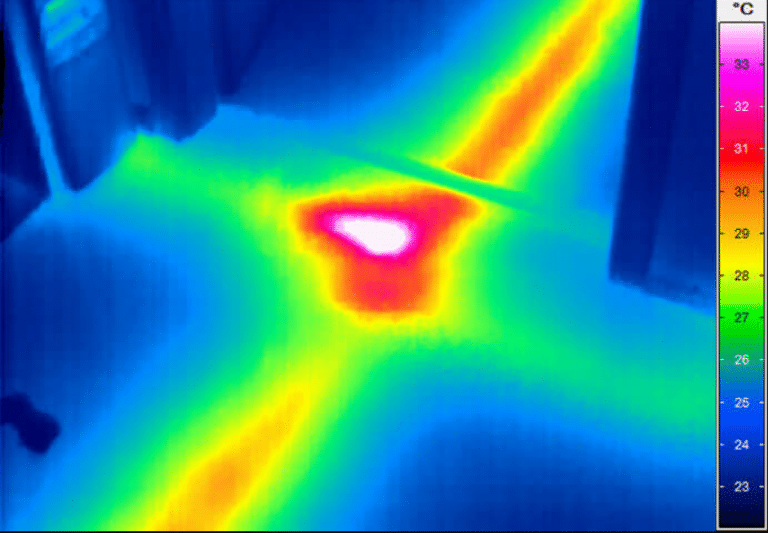
Because water can flow under walls and come from above, it is essential to inspect adjacent rooms even when no water is visible on the surface of floor coverings. In larger buildings, finding wet areas with moisture meters alone can be difficult, so thermal imaging is used to reveal water flow patterns and areas that are hard to reach, making it faster to document affected areas and how water migrated.
Establishing drying goals
The final step is establishing a dry standard and drying goal for the affected structure, systems and contents, and recording moisture measurements. The dry standard is usually determined by taking moisture readings from known dry materials in an unaffected part of the building and using those readings as the target. When unaffected materials are not available within the structure, a comparable building can be used to set the standard, or experience from previous drying projects.
Describe what you are noticing, such as odors, stains or damp flooring, and we will explain how we would assess it.
(619) 374-8554Or send a service requestHow It Works
How a Moisture Assessment Works
- 01
Identify the Source
We start by finding where the water is coming from, whether a plumbing leak, roof or exterior intrusion.
- 02
Measure & Map
Meters, sensors and thermal imaging map wet materials, including adjacent rooms.
- 03
Document Readings
Moisture measurements are recorded so the extent of the problem is clear.
- 04
Plan the Next Step
You get findings, the drying target and the repair cost before any repair work begins.
Equipment
Tools Used to Measure Moisture Accurately
Different materials and situations call for different instruments. We combine them to get an accurate picture.

Thermal view of moisture in a wall
Moisture Meters
Penetrating meters read moisture inside materials; non-penetrating meters scan surfaces without making holes.
Thermo-Hygrometers
Measure temperature and relative humidity in the air to understand drying conditions.
Thermal Imaging
Reveals moisture patterns across large areas and in places that are hard to reach.
Borescopes
Look inside wall cavities through a minimal opening to see conditions directly.
- Adjacent rooms checked, not just the visible spot
- Moisture readings recorded
- Repair cost before any repair work begins
Why It Matters
Why Professional Moisture Detection Matters
Trying to judge moisture by touch or sight is unreliable. Materials can feel dry while still holding enough water to support mold or cause damage later.
- Find the full extent. Measurements show where water has traveled, not just where it surfaced.
- Stop the source. Locating where water is coming from is the first step to controlling it.
- Dry it correctly. A documented dry standard tells you when materials are truly dry before they are closed up or refinished.
- Avoid repeat damage. Leaving wet materials in place can lead to mold, odors and repeat repairs.
Burst pipe or flooding right now? Shut off the main water valve, keep away from electrical equipment near the water and call us at (619) 374-8554. We are available 24/7.
Not sure which service you need? Describe what you are seeing and we will point you in the right direction.
(619) 374-8554Or send a service requestRelated Services
Services Related to Moisture Detection
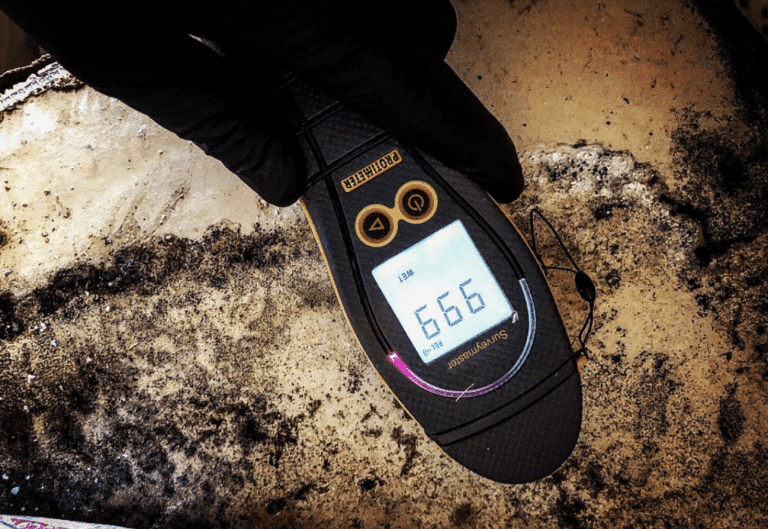
Moisture readings often lead to locating a specific leak or entry point.
Explore all of our leak detection services.
Service Area
Moisture Detection Across San Diego County
We provide moisture detection for homes, condos, HOAs and commercial buildings throughout San Diego County, from coastal communities to inland neighborhoods.
- Pacific Beach
- Point Loma
- Coronado
- Imperial Beach
- National City
- Chula Vista
- El Cajon
- Escondido
- Fallbrook
150 neighborhoods and communities listed
FAQs
Moisture Detection FAQs
Common questions about moisture detection. More answers on our leak detection FAQs page.
Talk to a leak detection specialist now. We answer 24 hours a day.
(619) 374-8554
What is moisture detection?
It is the process of finding and measuring water inside building materials using moisture meters, sensors, thermo-hygrometers and thermal imaging, then mapping how far it has spread from the source.
Can you detect moisture inside walls without opening them?
Yes. Non-penetrating meters and thermal imaging locate moisture from the surface. Penetrating meters use small pins, and a borescope can look inside a cavity through a minimal opening if needed.
Why check rooms where there is no visible water?
Water flows under walls and can come from above, so adjacent rooms can be wet even when floor coverings look dry. Checking them shows the true extent of the problem.
What is a dry standard?
It is the moisture level of known dry materials in an unaffected part of the building. Readings from wet areas are compared against it to decide when materials are dry enough to close up or refinish.
Can moisture detection help with mold concerns?
Mold needs moisture. Moisture detection locates the damp areas feeding mold growth and the source of the water, so the moisture problem can be stopped.
Do you find the source of the moisture too?
Yes. Identifying where the water comes from is the first step. We use leak detection methods such as thermal imaging and pressure testing to locate the leak or entry point.
Do you offer moisture detection throughout San Diego County?
Yes. Call (619) 374-8554, available 24/7, or see all service areas.
Think You Have a Leak?
Know How Far the Water Has Gone.
Contact us for moisture detection. We will find the source, measure the extent of the moisture and explain the next step before any repair work begins.

Request Moisture Detection
Send a request and we’ll get back to you quickly. For active leaks, please call.
Emergency? Call (619) 374-8554. We’re open 24 hours.