
Thermal Imaging Leak Detection
Thermal Imaging Leak Detection in San Diego
Water leaves a temperature signature that the naked eye cannot see. 1st Response Leak Detection uses thermal imaging cameras to trace hidden leaks and moisture behind walls, ceilings and floors in San Diego County homes and buildings, without cutting into them first.
- 24/7 Emergency Service
- 15+ Years Experience
- Licensed Contractor #1063131
- Serving San Diego County
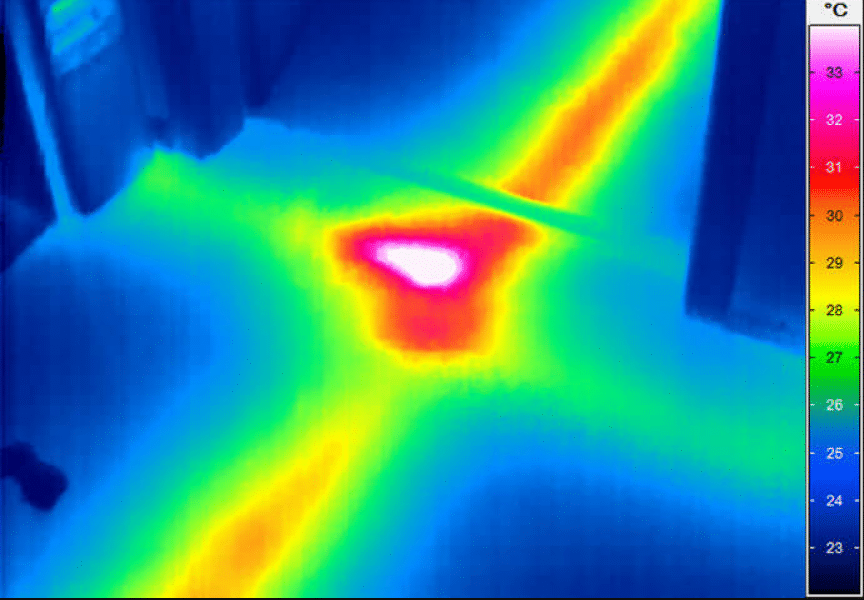
Thermal image of a hidden moisture pattern
Service Overview
What Is Thermal Imaging Leak Detection?
Quick answer
Thermal imaging leak detection uses an infrared camera to map surface temperatures across walls, ceilings, floors and building exteriors. Wet materials and leaking hot water lines show up as temperature differences, which lets a technician trace a hidden leak or moisture problem to its likely source non-destructively, then confirm it with moisture readings.
Water can enter a home or commercial building from many places: roofing problems, poor workmanship, siding and window failures, caulking breakdowns, inferior materials and, of course, plumbing leaks. Whatever the cause, the water often spreads unseen behind finished surfaces, and by the time you can see the damage, it may already be extensive.
Thermal imaging lets us look before anything is opened. Instead of cutting into drywall, pulling up tile or tearing up hardwood floors to search, our technicians scan the area and follow the pattern water leaves behind. That makes the inspection faster and helps avoid unnecessary repairs.
Thermal imaging is one of our most useful tools, but it works best as part of a complete diagnosis. We confirm what the camera shows with moisture meters and, when a pipe is suspected, with pressure testing, so the findings you receive are reliable. You will know the total cost of any repair before repair work begins.
When It Helps
When Thermal Imaging Is the Right Tool
Thermal imaging is most valuable when you can see a symptom but not the source, or when you need to know how far water has spread.
- Stains with no obvious sourceCeiling or wall stains that keep coming back.
- Warm spots on the floorA possible hot water line leak under the slab.
- Musty smell, no visible waterMoisture hiding inside walls or under flooring.
- Bubbling paint or warped trimMoisture pushing through finishes.
- After a leak or water damageConfirm whether areas have dried out.
- Leaks during or after rainTrace roof, window and exterior water entry.
- Unexplained high water billScan for hidden plumbing leaks.
- Commercial and multi-unit spacesScan large areas without disrupting tenants.
Want a documented inspection after water damage? See our infrared leak detection service.
The Technology
How Thermal Imaging Finds Hidden Leaks
A thermal imaging camera does not see through walls. It measures the surface temperature of building materials and displays the differences as a color image. Those differences are invisible to the naked eye, but they tell a technician a lot about what is happening behind the surface.
What the colors mean
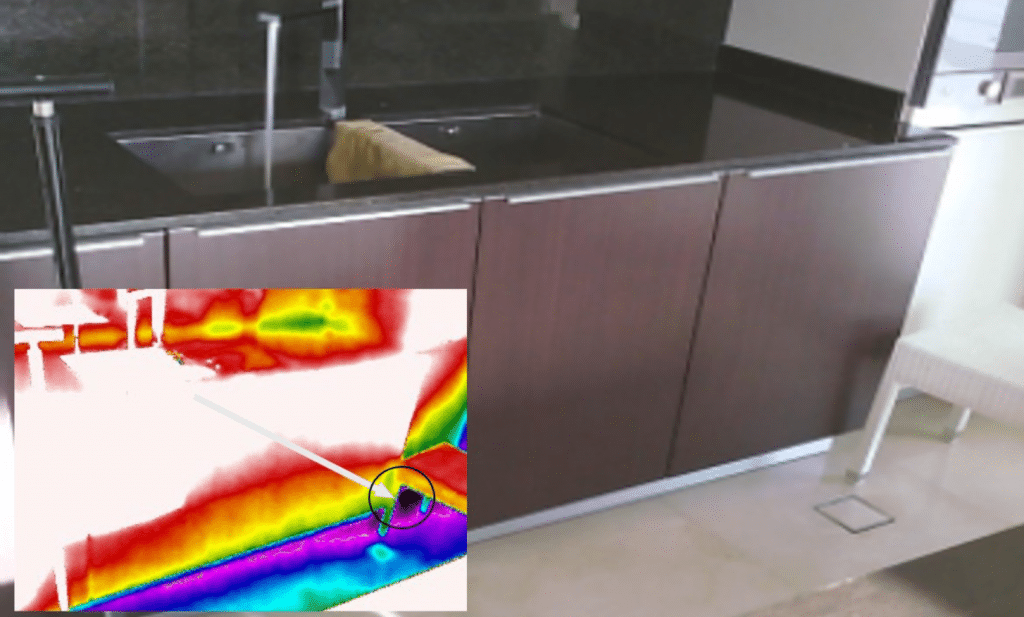
Wet walls and ceilings usually read cooler than the dry materials around them, often appearing as deep blue or purple areas with an irregular shape that follows the path of the water. A leaking hot water line beneath a floor does the opposite: it warms the surface above it, showing up as a bright yellow or orange pattern that can point toward a slab leak.
What thermal imaging can reveal
- Wet drywall, ceilings and insulation from plumbing or roof leaks
- Warm patterns from leaking hot water lines in floors and slabs
- Water intrusion around windows, doors and exterior walls
- Moisture spreading beneath flooring and behind cabinets
- Areas that have not fully dried after water damage
Why findings are always confirmed
Temperature differences can also come from insulation gaps, air leaks or sunlight on an exterior wall. That is why we verify thermal findings with moisture meters and, where needed, pressure testing or a borescope before recommending any repair. The thermal image narrows the search; testing confirms it.
Not sure which service you need? Describe what you are seeing and we will point you in the right direction.
(619) 374-8554Or send a service requestHow It Works
What Happens During a Thermal Imaging Inspection
- 01
Review the Symptoms
We look at the stains, odors, bill changes or damage you have noticed and where they appear.
- 02
Scan the Area
The thermal camera scans walls, ceilings, floors and exteriors around the problem and beyond it.
- 03
Confirm the Source
Moisture meters, pressure testing or a borescope verify what the camera shows.
- 04
Explain the Findings
You get clear findings and the total cost of repair before any repair work begins.
Tools We Combine
Thermal Imaging Works Best as Part of a Complete Diagnosis
We pair the thermal camera with other tools depending on what the scan shows and what the property needs.

Thermal camera and moisture meter
Thermal Imaging Camera
Maps surface temperatures to reveal the pattern water leaves behind finished surfaces.
Moisture Meters
Penetrating and non-penetrating meters confirm whether a suspect area is actually wet.
Pressure Testing
When a pipe is suspected, pressure tests confirm which line is leaking.
Borescope Inspection
A small camera looks inside wall cavities through a minimal opening when needed.
- No cutting into walls just to search
- Thermal findings confirmed before repair
- Repair cost before any repair work begins
Why It Matters
Why Choose Thermal Imaging Before Opening Walls
Water can be tricky: it often shows up far from where the leak actually is. Opening walls, ceilings or flooring to chase it can mean repairing damage you did not need to cause. A thermal scan first gives you a map.
- Non-destructive. No cutting into walls or ceilings, pulling up tiles or tearing up hardwood just to look.
- Faster answers. Large areas can be scanned quickly, so the search narrows in minutes rather than hours of trial and error.
- Targeted repairs. Your contractor can see where the problem is and what it looks like, which helps avoid wasted time and materials.
- Peace of mind after repairs. A scan can show whether an area has fully dried out after a flood or leak, or whether a problem persists.
Hidden leaks can be quietly damaging your home. If you have had a previous leak, notice recurring stains or simply want peace of mind, a periodic check can catch problems early.
Not sure which service you need? Describe what you are seeing and we will point you in the right direction.
(619) 374-8554Or send a service requestRelated Services
Services That Use Thermal Imaging
Thermal imaging supports many of our leak detection services.

Infrared inspections with documented findings after leaks or water damage.


See how thermal imaging fits into all of our leak detection services.
Service Area
Thermal Imaging Leak Detection Across San Diego County
We provide thermal imaging leak detection for homes, condos, HOAs and commercial buildings throughout San Diego County, from the coast to East County.
- La Jolla
- Del Mar
- Carlsbad
- Encinitas
- Solana Beach
- Coronado
- Point Loma
- La Mesa
- Escondido
150 neighborhoods and communities listed
FAQs
Thermal Imaging FAQs
Common questions about thermal imaging for leak detection. More answers on our leak detection FAQs page.
Talk to a leak detection specialist now. We answer 24 hours a day.
(619) 374-8554
How does thermal imaging detect water leaks?
A thermal camera measures surface temperatures. Wet materials usually read cooler than dry ones, and leaking hot water lines warm the surface above them. Those patterns help a technician trace a hidden leak to its likely source.
Can thermal imaging see through walls?
No. It reads the temperature of the surface, not what is behind it. Moisture or a leaking pipe behind the surface changes that temperature, which is what the camera picks up.
Does thermal imaging detect every leak?
Not on its own. It needs a temperature difference to work, and some patterns can come from insulation gaps or air leaks. We confirm thermal findings with moisture meters, pressure testing or camera inspection as needed.
Can thermal imaging find a slab leak?
It can help. A leak on a hot water line under the slab often warms the floor surface above it, which shows clearly on a thermal camera. Cold water line leaks are usually located with pressure testing and acoustic equipment. See slab leak detection.
Is thermal imaging safe for my home?
Yes. The camera is completely passive and non-invasive: it only reads the heat already coming from surfaces, and nothing has to be opened to take the images.
What is the difference between thermal imaging and infrared leak detection?
They use the same camera technology. This page explains how the technology works; our infrared leak detection page covers infrared inspections, including documenting findings and checking whether areas have dried out after water damage.
Do you offer thermal imaging leak detection throughout San Diego County?
Yes. Call (619) 374-8554, available 24/7, or see all service areas.
Think You Have a Leak?
See the Leak Before You Open a Wall.
Tell us what you are seeing and we will scan for the source with thermal imaging and confirm it before any repair is recommended.

Request a Thermal Imaging Inspection
Send a request and we’ll get back to you quickly. For active leaks, please call.
Emergency? Call (619) 374-8554. We’re open 24 hours.