
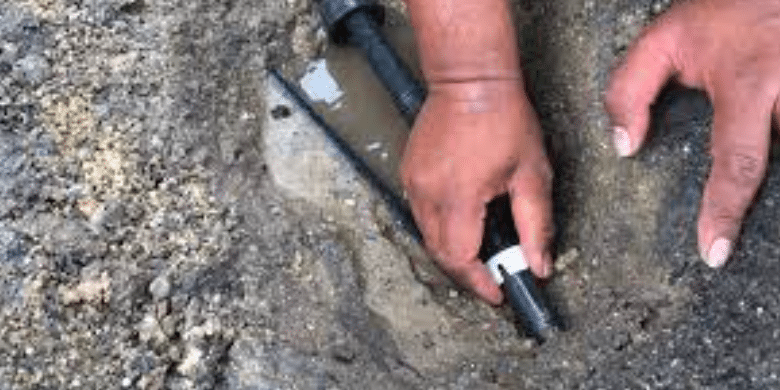
To find a water leak under concrete, first confirm a leak with the water meter, then narrow down which line is losing water by isolating fixtures and irrigation, and finally pinpoint the spot with non-invasive tools such as pressure testing, acoustic listening equipment and thermal imaging, before any concrete is broken. Digging or jackhammering to search for the leak is the most expensive way to find it.
Why leaks happen under concrete
Water lines run beneath slab foundations, driveways, patios and walkways. Common causes of leaks there include:
- Corrosion of older metal pipes, sometimes made worse by water chemistry or contact with soil
- Abrasion where a pipe rubs against concrete, gravel or other pipes as it expands and contracts
- Soil movement and settling that stresses pipes and joints
- High water pressure that strains pipes and fittings over time
- Installation problems, such as damaged pipe or poor joints when the slab was poured
Signs of a leak under concrete
- A water bill that rises with no change in use
- A water meter that moves when all water is off
- Warm spots on floors over a slab, from a leaking hot water line
- Damp or stained concrete, or moisture along the edges of a driveway or patio
- Wet spots in the lawn or soggy soil around the foundation
- New cracks in walls, floors or concrete surfaces, or peeling paint near the floor
- A musty odor or the sound of running water when nothing is on
Step 1: Confirm a leak
Turn off every faucet, appliance and irrigation zone and watch the water meter. If it keeps moving, water is escaping. Writing down a reading and checking it again after an hour or two of no use confirms it. See reading your water meter.
Step 2: Narrow down the line
Shut off irrigation at its valve and check the meter again. If your water heater has a cold supply valve, closing it for a short test can show whether the leak is on the hot side. A specialist can isolate individual lines and pressure test each one to identify exactly which is leaking.
Step 3: Pinpoint the leak without breaking concrete
- Acoustic listening equipment picks up the sound of water escaping a pressurized pipe through concrete and soil.
- Thermal imaging can follow the warm trail a hot water leak leaves on the floor surface.
- Moisture readings show how far water has spread into flooring and walls.
Once the spot is marked, the repair opens only that area, or the line can be rerouted if it has failed in more than one place.
Before anyone digs
If excavation outdoors is needed, utility lines must be located and marked first. In California, call 811 before digging so underground utilities can be identified. Never dig near a suspected gas line.
Getting help
For leaks under a home’s foundation, see slab leak detection. For leaks under patios, see patio leak detection. You may also find 5 signs of a slab leak useful. Call 1st Response Leak Detection at (619) 374-8554 or request service.