
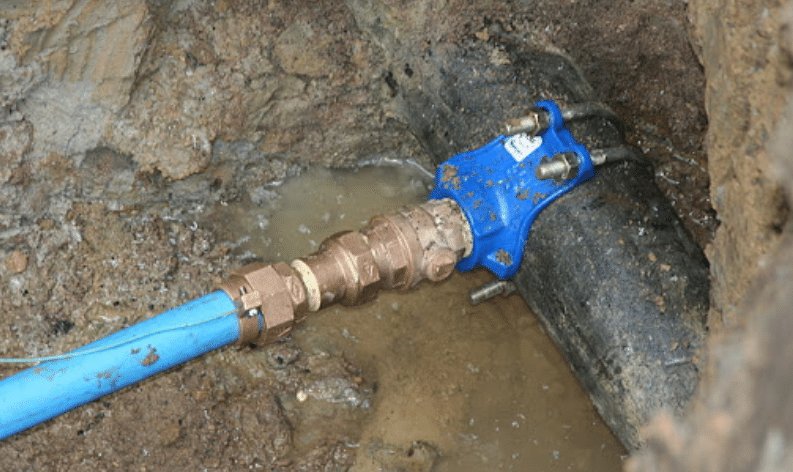
New and repaired water mains are disinfected, usually with chlorine, before they are put into service so that bacteria introduced during construction or a break do not reach the water supply. Disinfection is a standard step in water main installation and repair, carried out by the water provider or its contractors under public health standards. This article explains why it matters and how it connects to leaks and main breaks.
Why water mains are disinfected
When a main is installed, replaced or opened for repair, soil, debris and bacteria can enter the pipe. Before the line carries drinking water, it is flushed and disinfected, and water samples are tested to confirm it is safe. This protects public health and is required for public water systems.
How disinfection generally works
- Flushing. The new or repaired section is flushed to remove debris and sediment.
- Chlorination. A chlorine solution is introduced and held in the pipe for a set contact time.
- Flushing again. Highly chlorinated water is flushed out and handled so it does not harm the environment.
- Testing. Samples are tested for bacteria before the main returns to service.
The specific procedures are set by water system standards and the provider’s requirements.
The link between leaks, main breaks and disinfection
Leaks and breaks are one of the main reasons water mains have to be opened, repaired and disinfected. A leak that goes undetected can grow into a break, which means an emergency repair, service interruptions and another round of flushing and disinfection. Finding leaks early lets utilities plan repairs instead of reacting to breaks.
Older water mains
Aging mains, especially older cast iron and steel pipe, are more prone to corrosion, leaks and breaks. Corrosion can also affect water quality. Utilities monitor older mains, and locating leaks on them helps prioritize which sections need repair or replacement.
What property owners should know
- After nearby main work, your water may look cloudy or taste of chlorine for a short time; running a cold tap usually clears it.
- The utility main and service connection up to the meter are usually the water provider’s responsibility; the line on the property side of the meter is usually the owner’s.
- Water pooling near the street or meter, or a sudden drop in pressure, should be reported to your water provider.
For signs of a leak on your side of the meter, see 8 signs of a water main leak.
Leak detection for water systems
1st Response Leak Detection provides non-invasive leak detection that helps water providers locate leaks in distribution systems; see water purveyor leak detection. For leaks on residential and commercial properties, see high water bill detection, or call (619) 374-8554.