
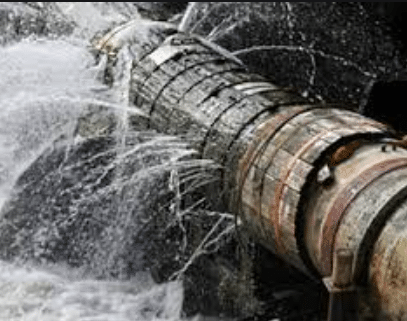
When a pipe is leaking and help is on the way, the priority is to stop the water, protect people and electrical areas, and contain the damage: shut off the main water valve (or the fixture’s shutoff), catch and remove standing water, protect nearby rooms and belongings, and use a temporary patch only if it is safe. These steps buy time; they are not a permanent fix.
Step 1: Shut off the water
If the leak is at a sink, toilet or appliance, close its local shutoff valve. If you cannot isolate it, or the leak is in a wall or ceiling, close the main water valve for the property. Opening a faucet at the lowest point of the house afterward relieves remaining pressure in the pipes. See how to turn off your water in an emergency.
Step 2: Make it safe
- Keep away from water near outlets, panels, light fixtures and appliances. If water is reaching electrical areas, switch off power to that area at the breaker if you can do so safely.
- Stay clear of sagging or bulging ceilings.
- Keep children and pets out of the affected area.
Step 3: Catch and remove the water
Put buckets or containers under drips, and use towels, mops and a wet vacuum to remove standing water. The less time water sits on floors and against walls, the less it soaks into materials.
Step 4: Protect nearby rooms and belongings
Close doors to rooms that are not affected, move rugs, furniture, electronics and documents out of the way, and lift items off the floor.
Step 5: Temporary fixes (only if safe)
- Tighten loose fittings on accessible connections, such as compression nuts under a sink.
- Pipe repair tape or a clamp can slow a small pinhole leak on an exposed pipe once the water is off.
- Do not attempt to open walls or ceilings to chase a leak, and do not turn the water back on until the leak has been properly repaired.
Step 6: Document the damage
Take photos of the leak and any damage before and after cleanup. Note the time you discovered it and what you did. This is useful for your records and for anyone you contact about the damage later.
When the source is not visible
If water is coming from a ceiling, wall or floor and you cannot see the pipe, the leak needs to be located before it can be repaired. That is what emergency leak detection is for: finding the source quickly with non-invasive tools. Afterward, leak repair can be targeted at the exact spot.
1st Response Leak Detection is available 24 hours a day. Call (619) 374-8554. Related: what causes burst pipes.