
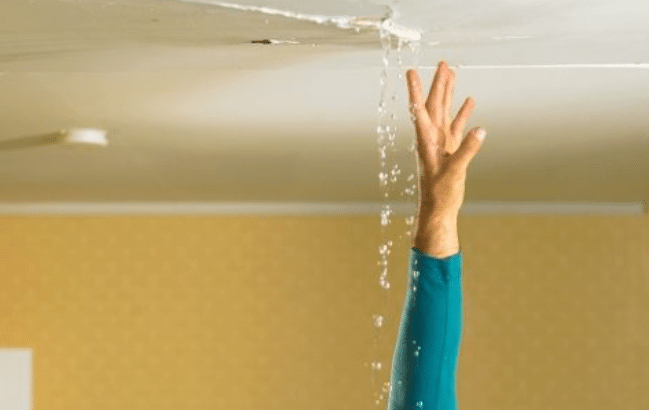
When water is leaking from the ceiling, protect people and belongings first, contain the water, work out whether the source is the roof or plumbing above, and stop the flow if it is plumbing. Then have the source located before the ceiling is opened. Ceiling leaks usually come from an upstairs bathroom, a supply or drain line in the ceiling cavity, HVAC equipment, or the roof during rain.
Step 1: Make the area safe
- Keep away from light fixtures, fans and outlets where water is dripping. If water is near electrical fixtures, switch off that circuit at the breaker if it is safe to do so.
- Do not stand under a ceiling that is sagging or bulging; it can give way.
- Move furniture, electronics, rugs and valuables out of the area.
Step 2: Contain the water
Put a bucket under the drip with a tarp or towels around it. If the ceiling is bulging with trapped water, it may be safer to relieve it by poking a small hole at the lowest point over a bucket, so water drains in one place instead of bringing down a larger section. Only do this if you can reach it safely.
Step 3: Work out the likely source
- Only during or after rain: likely the roof, flashing, a window or an exterior wall.
- When a toilet is flushed or a shower is used upstairs: likely a failed toilet wax seal, a drain connection or the shower pan.
- Constantly, regardless of use: likely a pressurized supply line in the ceiling or walls.
- On hot days or when the AC runs: possibly HVAC condensate.
Step 4: Stop the water if it is plumbing
If the leak continues regardless of use, shut off the main water valve. If it appears only when a particular fixture upstairs is used, stop using that fixture until it is checked. If the unit above belongs to someone else, let them, or the property manager or HOA, know right away.
Step 5: Document the damage
Take photos of the stain, drips and any damaged belongings, and note when you first noticed the leak.
Step 6: Have the source located
Water often travels along joists and pipes before it drips, so the stain may be some distance from the actual leak. Thermal imaging and moisture readings can trace the water back to its source without opening large sections of ceiling. See thermal imaging leak detection, roof leak detection and our guide to finding the source of an upstairs bathroom leak.
After the leak is fixed
Wet drywall and insulation need to dry fully before the ceiling is patched and painted, or mold and stains can return. Moisture readings confirm when materials are dry; see moisture detection.
For an active ceiling leak, call 1st Response Leak Detection at (619) 374-8554, 24 hours a day.