To find a roof leak, start inside: trace stains and drips back toward the roof, check the attic after rain for wet sheathing and insulation, then look at the most likely entry points outside, such as flashing, vents, skylights and damaged roofing. When the source still is not obvious, professional methods such as thermal imaging, controlled water testing and electronic membrane testing pinpoint it. Water often travels along rafters and sheathing before it drips, so the stain on your ceiling is rarely directly under the hole.
Signs of a roof leak
- Ceiling stains that appear or darken after rain
- Drips from light fixtures, vents or smoke detectors
- Damp or compressed insulation and dark spots on roof sheathing in the attic
- Peeling paint or bubbling drywall near the top of exterior walls
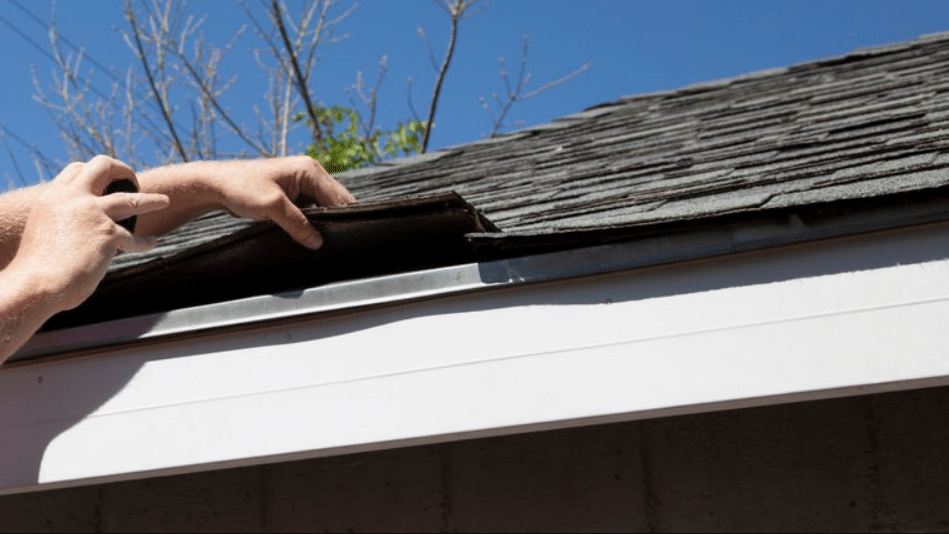
- Missing, cracked or curling roofing material, or debris in gutters
- A musty smell in upper rooms or the attic
How to trace a roof leak yourself
- Start at the stain. Note its location relative to outside walls, chimneys, vents and skylights.
- Go into the attic during or just after rain. Use a flashlight to look for water trails, damp wood and wet insulation upslope from the stain. Water runs downhill along framing, so follow the trail upward.
- Check the usual suspects. Flashing around chimneys, walls and skylights, pipe boots on plumbing vents, valleys where two roof slopes meet, and any area with damaged roofing material.
- Look at gutters and downspouts. Clogged gutters can back water up under the roof edge.
Do not walk on a roof that is wet, steep or fragile. If the trail is not clear from the attic, it is time for professional testing.
Professional roof leak detection methods
Thermal imaging
A thermal camera shows temperature differences across ceilings and roof surfaces. Wet insulation and materials hold heat differently from dry ones, so moisture often shows up as a distinct pattern, especially after sunset when the roof is cooling. See thermal imaging leak detection.
Controlled water testing
Water is applied to one section of the roof at a time, starting low and working upward, while someone watches inside for the leak to appear. Done carefully and in sections, it isolates the entry point. It takes time, and it needs to be done carefully so water is not forced under roofing that was not leaking.
Electronic leak detection for membrane roofs
On flat and low-slope roofs with a waterproofing membrane, electronic testing detects breaches by measuring how electrical current passes through the membrane. Low-voltage methods are commonly used on flat roofs and high-voltage methods on other surfaces. It can locate small breaches without flooding the roof.
Roof leak or something else?
Not every ceiling stain is a roof leak. Leaks that show up only during rain point to the roof, windows or exterior walls. Stains that appear regardless of weather are more likely plumbing, HVAC condensate or an upstairs bathroom. Rain leak detection covers water that only appears in wet weather, and the signs of a leak guide helps tell them apart.
Don’t wait for the next storm
A roof leak that goes untreated soaks insulation, rots sheathing and framing and leads to mold. For help locating where water is getting in, see roof leak detection, read our common types of roof leak detection, or call 1st Response Leak Detection at (619) 374-8554.