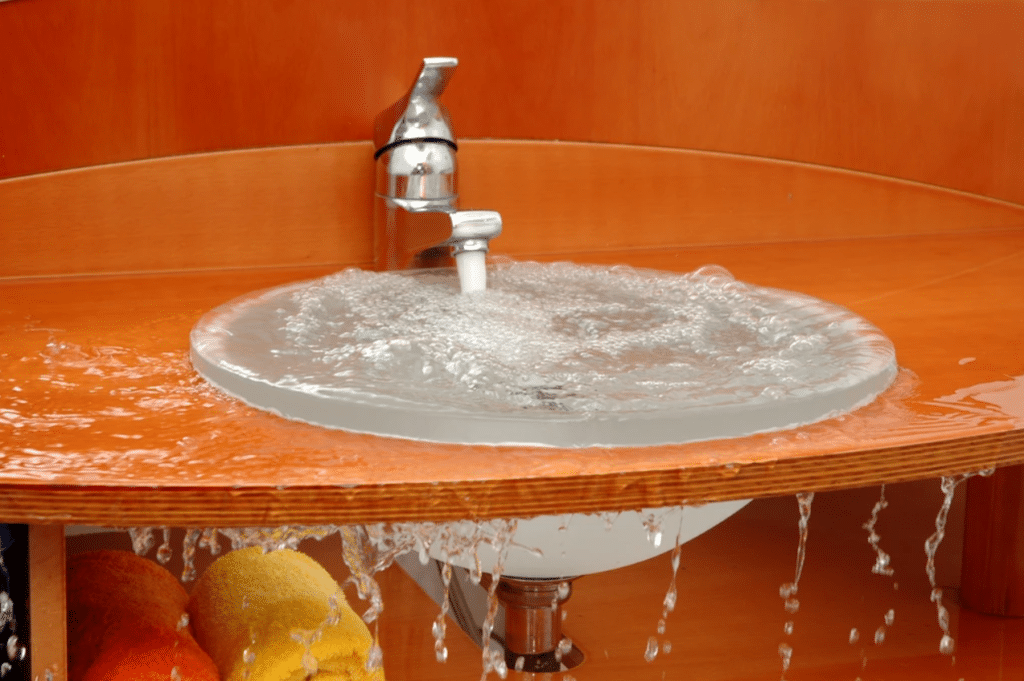
Shower and sink leaks usually start at worn seals, cracked grout or caulk, a failing shower pan, or loose connections under the sink. The signs are stains on the ceiling or wall behind the fixture, loose tiles, swollen cabinets and musty odors. Because the water often escapes into the wall or subfloor, a shower or sink can leak for a long time before it shows.
Where shower leaks come from
- Grout and caulk. Cracked grout and failed caulk around the tub, tray, corners and fixtures let water get behind the tile with every shower.
- The shower pan or tray. A cracked or poorly sloped pan, or a failed liner beneath tile, lets water reach the subfloor and the ceiling below. Our article on what to do if your shower pan leaks goes into detail.
- The drain assembly. A loose or failed drain gasket leaks only when the shower runs, which can make the problem seem intermittent.
- The valve and supply lines. A leak at the mixing valve or the pipes behind the wall can leak whether or not the shower is in use.
- Door and enclosure seals. Water escaping past a door or curtain can soak the floor and the subfloor at the threshold.
Where sink leaks come from
- Supply lines and shutoff valves under the sink, especially older braided or plastic lines.
- The P-trap and drain connections, which can loosen or crack.
- The faucet base and handles, where worn cartridges or O-rings let water run down into the cabinet.
- The sink rim, where failed sealant lets splashed water seep under the countertop.
Signs your shower or sink is leaking
- Stains or bubbling paint on the ceiling below a bathroom
- Loose or cracked tiles, or grout that stays dark long after showering
- Peeling paint or soft drywall on the wall behind the shower
- A swollen or water-stained cabinet base, or a damp smell under the sink
- Damp flooring or baseboards next to the tub or shower
Simple checks you can do
- Dry run the cabinet. Wipe the area under the sink completely dry, run the water for a few minutes, then feel the supply lines, valves and trap for moisture.
- Test drain and supply separately. Fill the sink and let it drain while watching the trap. Then run water with the drain open. A leak during only one of these tells you whether it is the drain or the supply side.
- Inspect grout and caulk. Look for gaps, cracks and missing caulk, especially at corners and where the tub meets the wall.
- Watch the ceiling below. If there is a room under the bathroom, check its ceiling after the shower has been used.
When to call a leak detection specialist
If the water is going into the wall or floor and you cannot see where, testing narrows it down without removing tile. Thermal imaging, moisture readings and isolating the drain, pan and supply help confirm the source before any tile comes up. See sink and shower leak detection, or our guide to simple ways to check for plumbing leaks around the house.
Call 1st Response Leak Detection at (619) 374-8554 or request service online.