
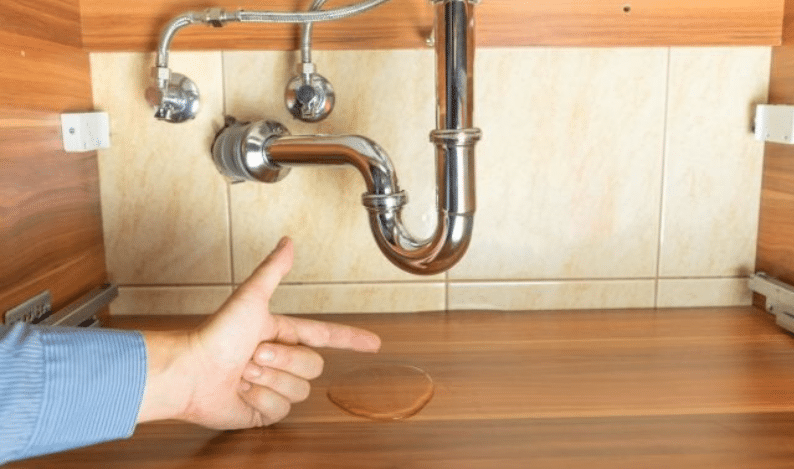
The simplest way to check a whole house for plumbing leaks is to start at the water meter, then work through the fixtures most likely to leak (toilets, faucets, water heater and appliance hoses) and finish with the exterior pipes and irrigation. These checks will not fix a leak, but they tell you whether you have one and roughly where to look.
Step 1: Use the water meter
Turn off every faucet, appliance and irrigation zone. Look at the meter’s dial or leak indicator; if it keeps moving, water is flowing somewhere. For a second check, write down the reading, use no water for an hour or two and read it again. A change confirms a leak even if nothing is visible. See detecting leaks and reading your water meter.
Step 2: Check the toilets
Toilets are one of the most common sources of household leaks.
- Dye test: add a few drops of food coloring to the tank and wait 15 to 30 minutes without flushing. Color in the bowl means water is leaking from the tank past the flapper.
- Check the base: a toilet that rocks, or water or staining around the base, can mean a failed seal at the floor.
- Look at the ceiling below an upstairs toilet for stains, which often point to a leak at the base or supply line.
More in how to detect a silent toilet leak.
Step 3: Faucets, showers and sinks
Look for drips at spouts and handles, moisture under sinks and dark grout or loose tiles in showers. Showers and tubs can leak into walls without any visible water; shower and sink leak detection covers those in detail.
Step 4: Water heater and appliances
- Check around the water heater for water, rust or corrosion at fittings and the base.
- Inspect washing machine, dishwasher and refrigerator supply hoses for bulges, cracks or damp connections.
Step 5: Walls, ceilings and floors
Walk the house looking for stains, bubbling paint, soft drywall, warped flooring and warm spots on tile floors. Listen for running water when everything is off. These can point to leaks inside walls or under a slab.
Step 6: Exterior pipes and irrigation
- Look for corrosion on exposed pipes and hose bibs.
- Watch for unusually green or soggy patches of lawn, which can mean an underground or irrigation leak.
- Check hoses and spigots for drips.
When to call a professional
If the meter shows a leak but none of these checks find it, the leak is probably hidden in a wall, under the slab or underground. That is where professional detection saves time and avoids unnecessary demolition. See mystery leak detection and the signs of a leak guide, or call 1st Response Leak Detection at (619) 374-8554.